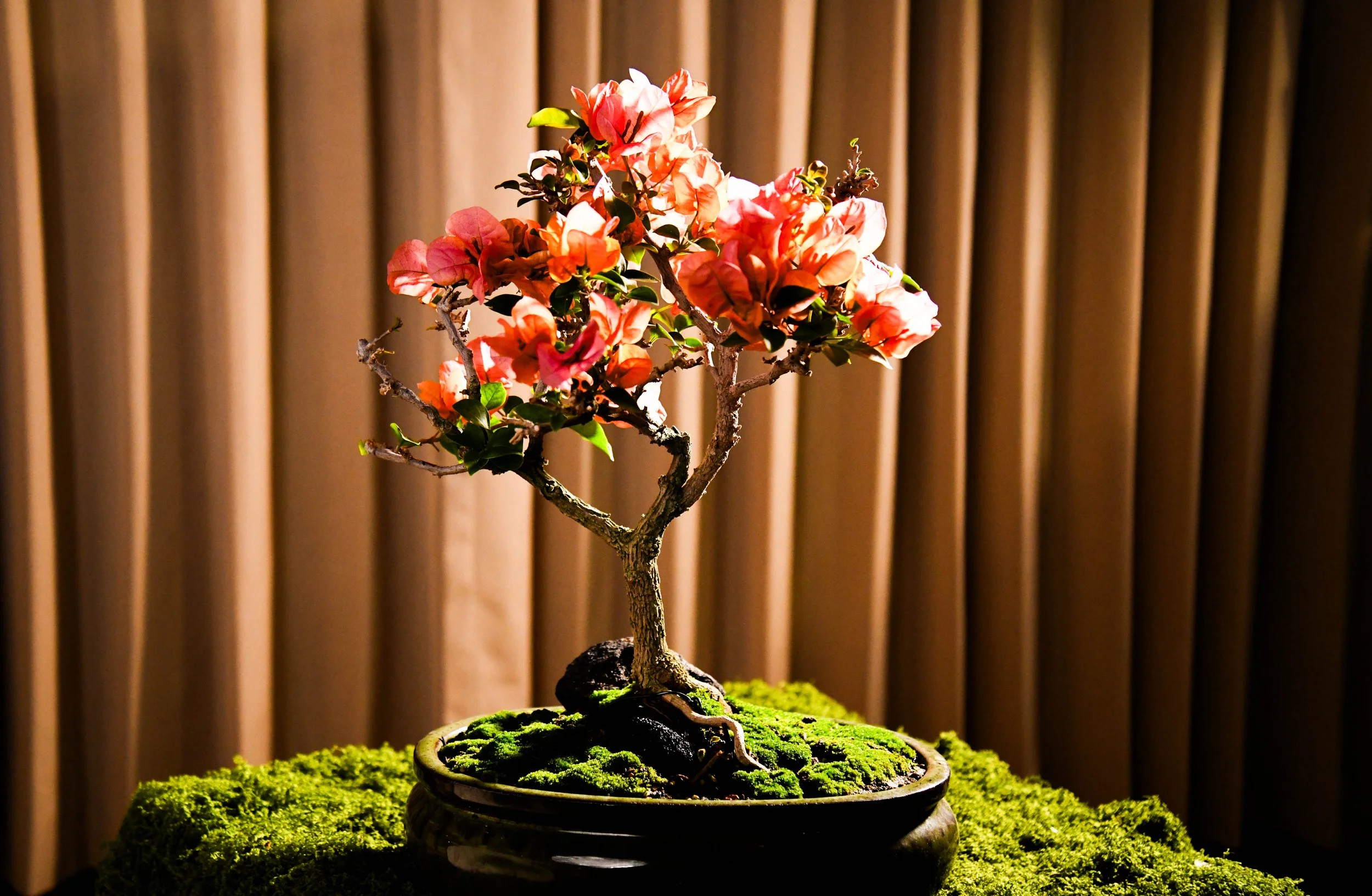
Bonsai Art
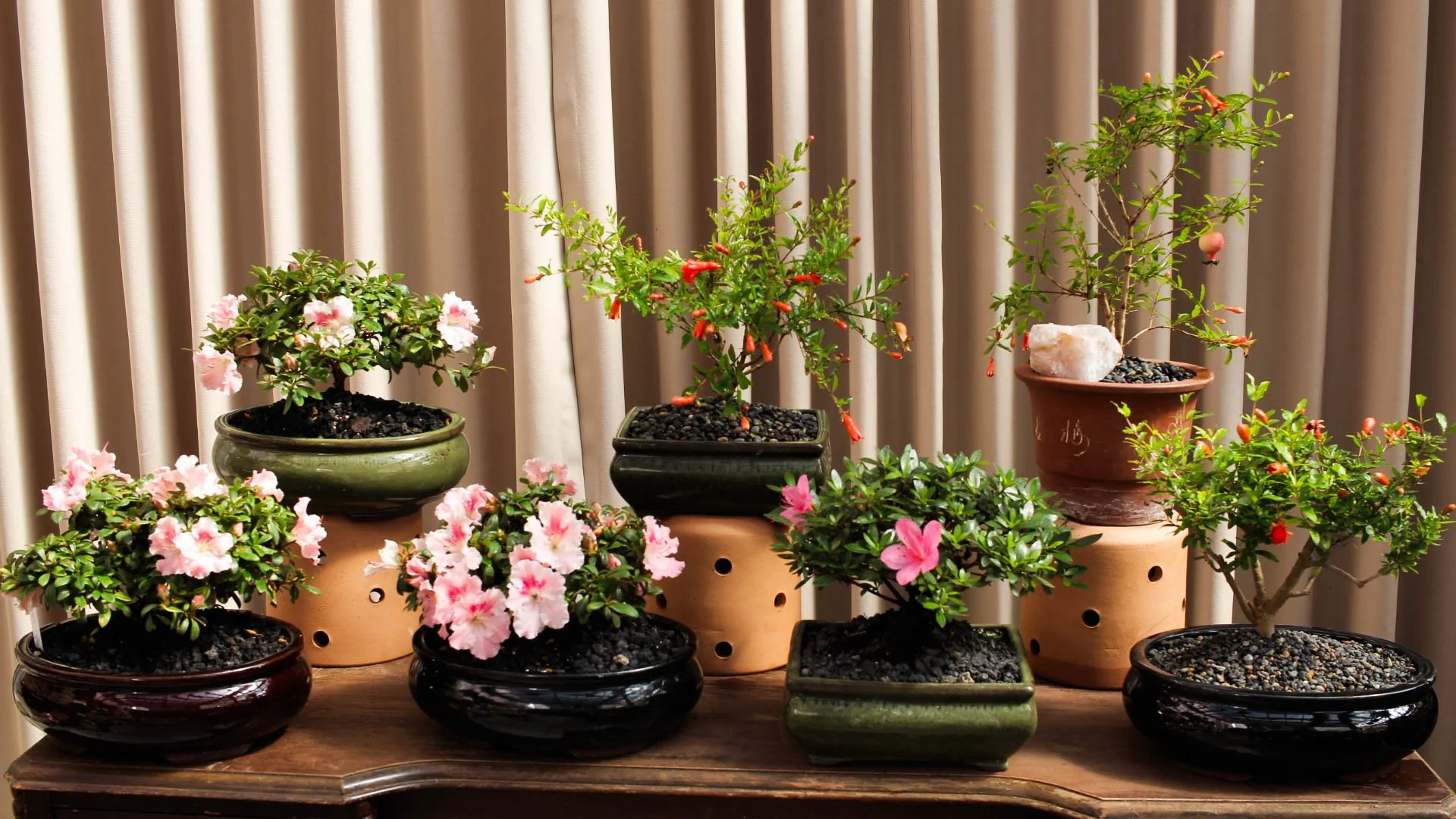
Our collection of bonsai at Orchid Boutique. Azalea & promegranate.
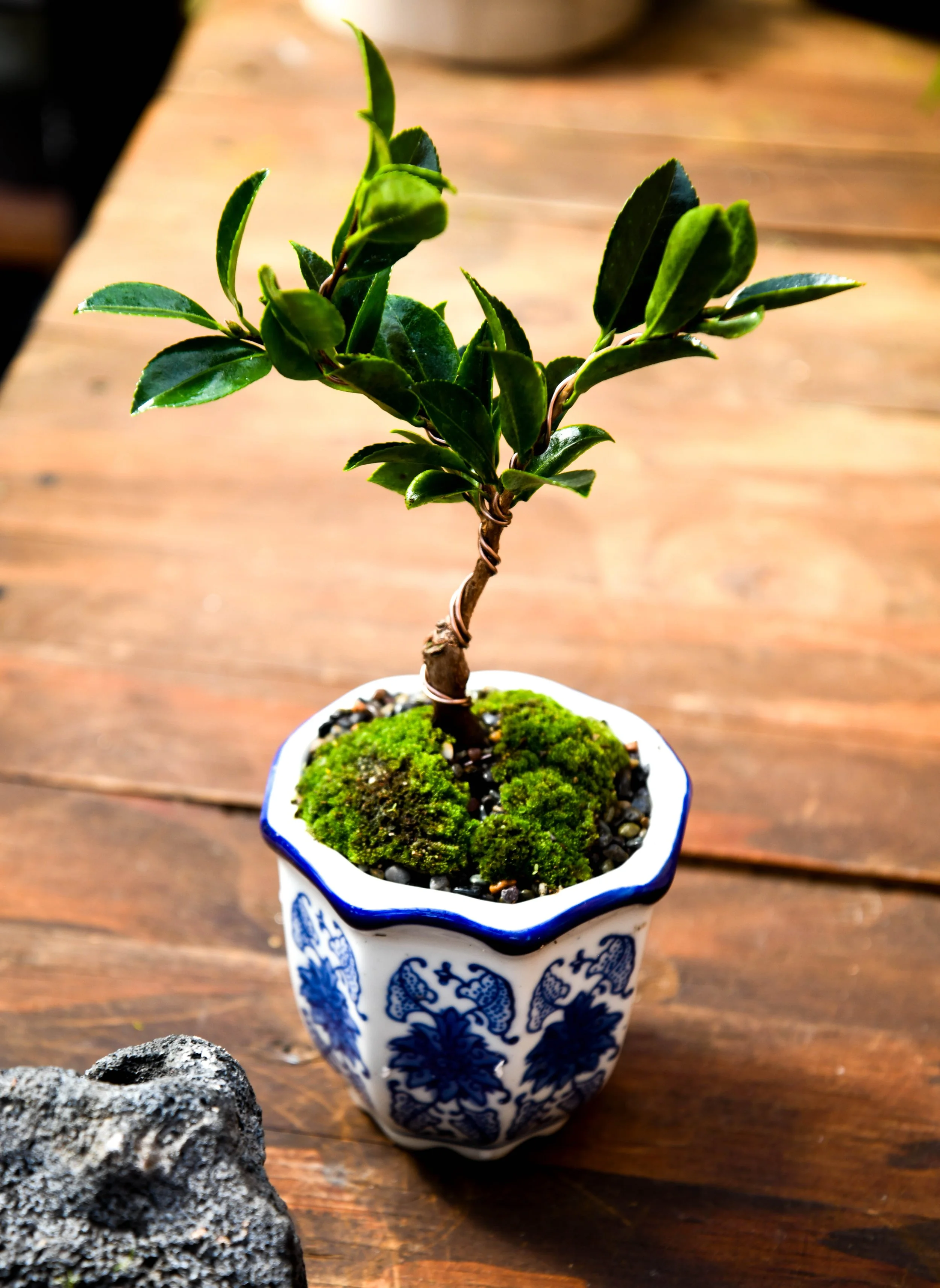
Discovery of Bonsai Art
Ada Law’s journey into bonsai did not begin with a plan—it began with observation.
After years of working with flowers and plants, she found herself drawn to something quieter. Bonsai asked for less urgency and more patience. It wasn’t about arranging beauty for a moment, but about guiding growth over time. Watching a bonsai change slowly—almost imperceptibly—became grounding. Ada often speaks about how bonsai taught her to appreciate progress that cannot be rushed. A leaf doesn’t open because you want it to. A branch doesn’t thicken on demand. Everything happens when it’s ready.
For Ada, bonsai became a reminder that growth—whether in plants or in life—does not need to be loud to be meaningful. Bonsai is more than a plant—it is a practice in patience, presence, and restraint. At first glance, it appears simple: a small tree in a shallow pot. But the longer you sit with it, the more it reveals.
A bend in a branch.
A pause in growth.
A reminder that not everything needs to rush forward.
Bonsai invites us to slow down.
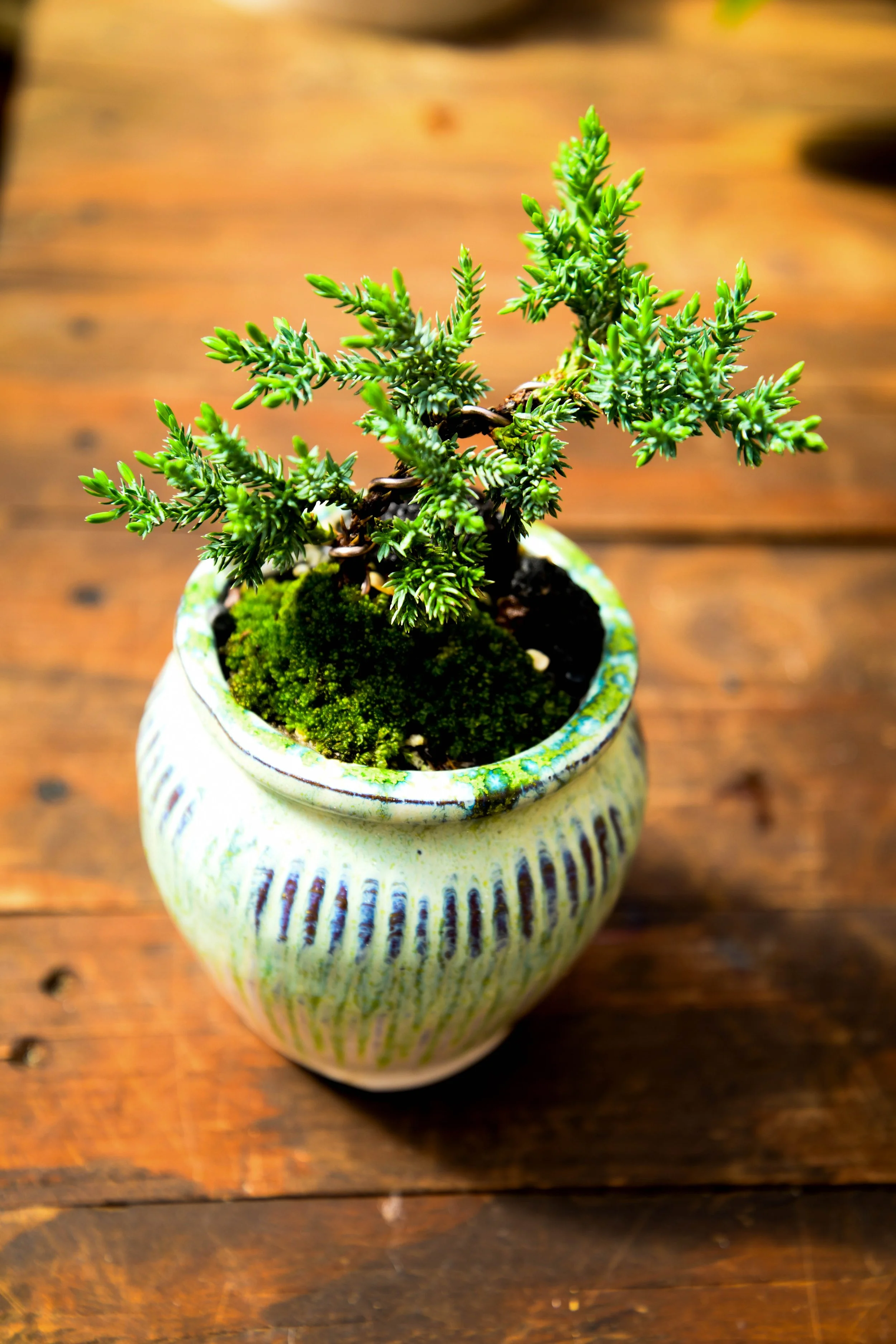
What Is Bonsai? A Living Expression of Minimalism
Bonsai is the art of cultivating trees in miniature form, emphasizing balance, proportion, and harmony. Rather than making a tree small, bonsai teaches us to see intention in simplicity.
Every branch has purpose.
Every cut is considered.
Even empty space becomes part of the design.
This quiet minimalism is what first drew Ada Law to bonsai.
Ada Law’s journey into bonsai did not begin with a plan—it began with observation.
After years of working with flowers and plants, she found herself drawn to something quieter. Bonsai asked for less urgency and more patience. It wasn’t about arranging beauty for a moment, but about guiding growth over time.
Watching a bonsai change slowly—almost imperceptibly—became grounding. Ada often speaks about how bonsai taught her to appreciate progress that cannot be rushed. A leaf doesn’t open because you want it to. A branch doesn’t thicken on demand. Everything happens when it’s ready.
For Ada, bonsai became a reminder that growth—whether in plants or in life—does not need to be loud to be meaningful.
The Therapeutic Benefits of Bonsai Trees
Caring for a bonsai is an act of presence. It requires attention, but not force. Guidance, but not control.
Many people, including Ada, find bonsai deeply therapeutic because it shifts focus away from outcomes and toward process. Watering, trimming, and simply observing becomes a calming ritual—one that encourages mindfulness and patience.
Bonsai care can help:
Reduce stress through routine and observation
Encourage focus and emotional grounding
Create moments of quiet reflection
Watching something small grow slowly can be surprisingly powerful.
The History of Bonsai: A Tradition Rooted in Time
Bonsai traces its roots back over a thousand years, originating from Chinese penjing before being refined in Japan. Historically, bonsai represented harmony between nature and humanity.
Often practiced by scholars and monks, bonsai was never meant to impress—it was meant to reflect balance, discipline, and respect for time. Trees were shaped slowly, sometimes over generations, becoming living expressions of patience.
This philosophy resonates deeply with Ada’s approach to plant design today.
Creating a Bonsai Garden at Home
A single bonsai offers calm. A small bonsai garden offers perspective.
Ada believes bonsai gardens create a sense of rhythm within a space. Whether placed near a window, on a desk, or in a quiet corner, they invite you to pause. To notice. To return to the present moment.
A bonsai garden doesn’t demand attention—but it rewards it.
How to Care for a Bonsai Tree
Bonsai care is simple, but intentional.
Light
Most bonsai prefer bright, indirect light or gentle outdoor sun, depending on the species.
Water
Water when the soil begins to dry, ensuring even moisture without oversaturating.
Pruning
Light pruning helps guide shape and encourages healthy growth over time.
Patience
Consistency matters more than perfection. Bonsai thrives when allowed to grow at its own pace.